

"Thunder is good, thunder is impressive; but it is the lightning that does the work."
This quote has a special connection to Labor Day. Although everyone sees the business success, the hard work behind the scenes often goes unnoticed. That’s why we don’t miss any chance to shout out to our pillars.
In The STEAM Generation, Labor Day holds special meaning. Our mission to provide experiential STEAM learning to kids would not be possible without the countless hours and devotion of our volunteers.
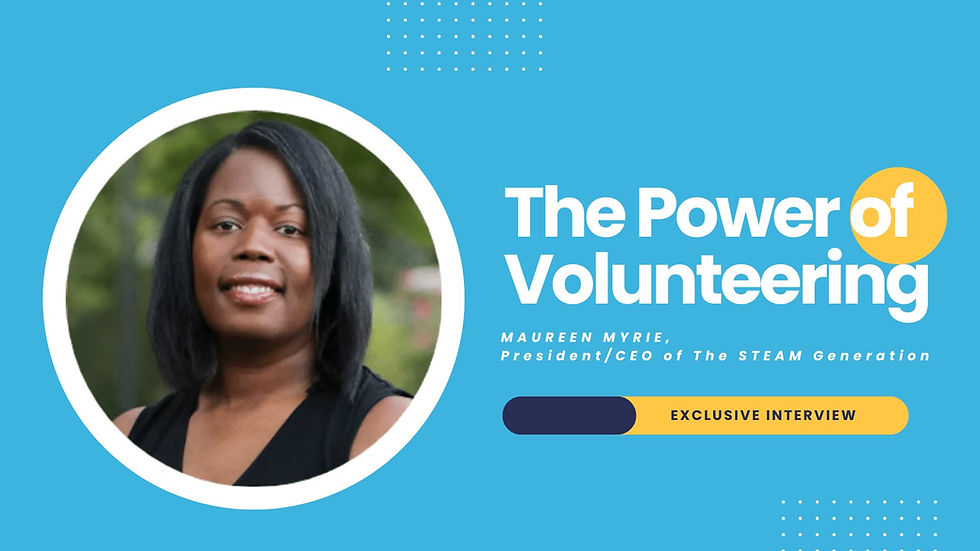
In this exclusive conversation, our CEO Maureen Myrie shares her insights on the transformative role volunteers play in shaping the future of STEAM education and inspiring the next generation of innovators.
Here are some excerpts from our discussion:
Why are volunteers so important to The STEAM Generation’s mission?
Volunteers are the backbone of our work. They bring diverse sets of skills and experiences that strengthen our programs, enabling us to operate more efficiently. Apart from logistics, they help students to real-world STEAM careers through mentorship and storytelling, sparking curiosity and confidence. And when it comes to large-scale events and workshops, volunteers make the impossible possible—we simply couldn’t do it without their support.
Can you share a memorable moment where volunteers made a real difference in a program or a student’s life?
One of the most inspiring examples was during our “Girls Let’s Build Day” workshop at the Protiviti office. Volunteers there went above and beyond, from packing engineering supply kits and sorting LEGO sets to guiding the girls through their engineering projects. Their support and contribution were instrumental in building the girls' confidence and enthusiasm for engineering.
But what truly stood out was when Protiviti staff shared their personal career journeys in STEAM. That mentorship and storytelling gave our students a glimpse into what’s possible for their own futures.
We also rely on skilled volunteers for critical operational projects.
A great example is the global team of volunteers who designed and built The STEAM Generation’s website. Their work directly expanded our ability to connect with more families, educators, and donors, multiplying our impact far beyond the classroom.
How do volunteers help expand access to STEAM education in underserved communities?
Corporate volunteer partners are vital in ensuring students in low-income areas have access to high-quality STEAM education.
For instance, Shadow-Soft and other corporate groups sponsor and support our workshops at Title I schools, where the majority of students qualify for free or reduced lunch. These events offer hands-on projects, essential materials, and meaningful mentorship opportunities that students may not otherwise have access to. Through these partnerships, we’re able to break down barriers and bring STEAM directly to those who need it most.
What message would you give to current and future volunteers about their role in shaping the next generation of innovators?
To our current volunteers: You are the heartbeat of our mission. Your dedication, energy, and time make an enormous impact—thank you for everything you do.
To future volunteers: You don’t have to be a scientist or engineer to make a difference. All you need is enthusiasm and a willingness to lend a hand. Whether you join us virtually or in person in the metro Atlanta area, your support has the power to inspire and change lives.
Join Us in Empowering the Next Generation
As we celebrate Labor Day, The STEAM Generation extends heartfelt gratitude to every volunteer who has helped us deliver engaging, hands-on STEAM experiences to children across communities. Their efforts remind us that meaningful work isn’t only about what we do for ourselves; it’s also about what we build for the future.
If you’d like to be part of this mission, we welcome you to join our growing network of volunteers and help us empower the next generation of thinkers, creators, and innovators.
Coding is today’s language of creativity, and every kid deserves a chance to be a creator.
Think about it—the pace at which technology has taken the front seat in our daily lives is astounding. Whether you’re ordering food from the comfort of your home or casually scrolling through Instagram, it’s all powered by code. Like an invisible force working behind the scenes, code makes the digital world function. Understanding it means having the power to shape that world.

The Importance of Early Coding Education
When children are introduced to coding at an early age, they gain not only technical advantages but also develop essential problem-solving and creative thinking skills. This leads to an out-of-the-box understanding of the world around them. Early exposure to coding lays the foundation for lifelong learning and opens doors to success in the digital world.
Why Coding Education Should Start Early
As parents, we always look for ways for our kids to solve their problems with ease and expertise. Voila! Enter coding. It introduces children to logical sequencing and algorithmic thinking—skills that are essential not only in technology but in life. Programming teaches children how to break down complex problems into small, manageable steps, instilling a strong problem-solving mindset. This way of thinking extends far beyond the computer and is a valuable asset for tackling everyday issues.
Teaching Life Skills Beyond Computers

We often believe that coding is all about computers—but that’s only the tip of the iceberg. It builds resilience, creativity, and collaboration. Kids learn to test, fail, and try again—developing perseverance and a growth mindset. If it’s a group coding project, it encourages teamwork and effective communication, which are crucial life skills.
Coding Prepares Kids for the Future Tech
In today’s fast-paced world, technology is evolving at an unprecedented rate. The good news? Coding can prepare your child for these shifts early on.
Artificial Intelligence is laying the foundation for numerous emerging technologies, including robotics, machine learning, and data analysis. Children who start coding at a young age gain a strong head start, enabling them to easily adapt to changes and innovations. Through STEM education courses, they gain skills that not only make schoolwork easier but also prepare them to compete in the years ahead.
Fun and Engaging Learning Methods
It’s often believed that coding is boring. But what if we told you that you can play games and code together? Coding for kids doesn’t feel like “schoolwork.” With platforms like Scratch, Minecraft, and Roblox, children can build games, design animations, and bring their imagination to life. Using these interactive tools, learning to code becomes a fun and engaging experience.
Builds Resilience and Confidence
One of the most valuable life lessons children gain from coding is how to handle failure positively. When writing code, errors (bugs) are common. Instead of seeing them as obstacles, kids learn to approach them as puzzles to solve. This process of testing, fixing, and trying again teaches perseverance and resilience.
The sense of achievement children experience as they solve problems independently boosts their self-confidence.
Why Coding is Essential for Every Child
Coding is not just about tech—it’s about creativity, problem-solving, and confidence. A win-win situation. It also enables your child to adapt to any new technologies that come their way.
The Benefits of Early Coding Education
To make it easy for you, we’ve added a quick comparison table on why coding should start early.

Enroll Your Child in Coding Programs
Frequently Asked Questions
What is the right age to learn coding?
Children as young as 4 years old can start with block-based coding, then gradually move to text-based programming as they grow.
Is coding too complex for young kids to understand?
Not at all. Platforms like Scratch and Minecraft make coding accessible and engaging by utilizing games, stories, and visual blocks.
How does coding help in my child’s future?
Coding builds problem-solving, creativity, and logical thinking skills that are valuable in academics and future careers.
Does learning coding mean my child will spend more screen time?
Not necessarily. Coding classes are structured and purposeful, ensuring kids spend quality time creating—not just consuming technology.
Can coding improve academic performance?
Yes. Coding strengthens math, logic, and critical thinking, which often translates into better performance in school subjects.
What tools or languages do kids start with?
Most kids begin with Scratch, Blockly, or Minecraft coding before progressing to Python, JavaScript, or other advanced languages.
- Sep 24, 2024
As parents and educators, we are always seeking meaningful ways to introduce children to scientific concepts through fun, hands-on learning. One of the most engaging ways to teach children about the phases of the moon is by creating a simple model at home using materials you likely already have. In this article, we'll explore a bit about the moon and then dive into a hands-on project that will help your child understand and visualize the moon's phases.

About the Moon
The moon is Earth’s only natural satellite, and it plays a key role in life on our planet. It affects the ocean's tides, helps stabilize Earth’s climate, and has been a source of wonder for millennia. The moon does not produce its own light but instead reflects light from the sun, and as it orbits Earth, we see different portions of its lit side, creating the phases of the moon.
The Phases of the Moon
There are eight distinct **phases of the moon** as it orbits around the Earth:
New Moon: The moon is between Earth and the Sun, and we can't see the moon from Earth.
Waxing Crescent: A small, crescent-shaped sliver of the moon becomes visible.
First Quarter: We see half of the moon illuminated.
Waxing Gibbous: More than half of the moon is visible, but it's not yet full.
Full Moon: The entire face of the moon is illuminated and visible from Earth.
Waning Gibbous: After the full moon, the illumination begins to decrease.
Last Quarter: Half of the moon is again visible, but the opposite half from the first quarter.
Waning Crescent: Only a small crescent is visible before the cycle repeats with a new moon.
Why Do These Phases Happen?
The phases occur because of the moon's position relative to Earth and the Sun. As the moon moves through its orbit, the amount of sunlight it reflects toward Earth changes. This gradual change causes the phases that we see from our perspective.
Hands-On Activity: Model the Phases of the Moon with Clay or Playdough
This activity is a fun, creative way for kids to **model the phases of the moon** and learn how the moon’s position relative to the Earth and Sun causes different phases.
Materials Needed:
- White clay or playdough (this will represent the illuminated part of the moon)
- Black or gray clay or playdough (this will represent the shadowed part of the moon)
- A flat surface or small board to display the phases
- A night sky view for real-world reference
Step-by-Step Instructions:
Step 1: Observe the Night Sky
Before beginning the activity, encourage your child to observe the **moon in the night sky**. Is it a full moon? A crescent? This observation helps them understand the phases and gives a real-world connection to the project.
Step 2: Roll Out Your Clay
Take your white clay or playdough and roll out eight small balls, one for each moon phase. Do the same with your black or gray clay. These will represent the different phases of the moon.
Step 3: Model the New Moon
For the New Moon, use the black clay entirely. This phase is when the moon is completely in shadow and not visible from Earth.
Step 4: Create a Waxing Crescent
For the Waxing Crescent moon, mold a small crescent shape of white clay on one side of the black clay ball. This represents the sliver of the moon that is illuminated and visible from Earth.
Step 5: Model the First Quarter
For the First Quarter, mold half of the ball with white clay and the other half with black clay. This phase shows half of the moon’s surface illuminated.
Step 6: Waxing Gibbous
For the Waxing Gibbous, cover more than half of the ball with white clay, leaving only a small section of black. This shows that the moon is nearly full but not quite.
Step 7: Full Moon
For the Full Moon, cover the entire ball with white clay. This is the phase when the moon is fully illuminated from Earth’s perspective.
Step 8: Waning Phases
Next, reverse the process to create the Waning Gibbo, Last Quarter, and Waning Crescent phases:
- Waning Gibbous: Leave a small portion of the ball black, showing the moon’s illumination beginning to decrease.
- Last Quarter: Half white, half black again, but on the opposite side compared to the first quarter.
- Waning Crescent: Only a small sliver of white, with most of the ball covered in black clay.
Step 9: Arrange the Phases
Once you've modeled all eight phases, arrange them in a circle on your flat surface or board to represent the moon’s orbit around the Earth.
Step 10: Discuss and Observe
As you finish, discuss with your child how the moon moves through these phases as it orbits Earth. You can also continue observing the moon each night to see the phases in real-time!
Why This Activity Is Important
This hands-on STEAM project not only reinforces the science of moon phases but also taps into your child’s creativity and problem-solving skills. By physically manipulating the clay, they are better able to understand the abstract concept of the moon's changing appearance over time.
Learning Outcomes:
- Scientific Understanding: Your child will learn about the moon’s phases and the Earth-moon-sun relationship.
- Art and Creativity: Using clay to model the phases fosters creativity.
- Fine Motor Skills: Shaping and molding the clay builds fine motor skills.
- Real-World Connection: Observing the moon in the night sky helps solidify the concept and makes the learning experience more meaningful.
Conclusion
Creating a phases of the moon model with clay is an exciting and interactive way to teach children about the moon’s orbit and its effect on how we see it from Earth. It combines science with art and offers a hands-on way for kids to explore and learn about the natural world. Plus, it opens up opportunities for real-time observation that extends the learning beyond the home. Try this activity with your kids tonight, and watch as they light up with excitement for space science!
Don’t forget to encourage your child to look at the moon during different phases over the coming weeks to observe the gradual change.
Discover Our Programs https://steamgeneration.org
Take the excitement of volcano-making to the next level with our hands-on STEAM activities. Nurture your child's potential, and who knows, the next great scientist or engineer might just be in your backyard!


